
Understanding the prehistoric farm island order changes how you spend every coin, because buying the wrong boat early stalls your fossil collection for hours. The game opens with a single dig site, but the real progression lives across a chain of wild islands that each gate new fossil sets, fishing spots, and eventually the Sunken Grotto. This guide maps the exact sail path, boat price ladder, and the practical limit on how far you can travel.
Mapping the Prehistoric Farm Island Order
The prehistoric farm island order follows a deliberate difficulty curve that mirrors your growing boat capacity and dino roster. You start on a modest starter shore where basic fossils spawn in shallow dig zones, then unlock farther isles as your sailing range expands. According to the official Prehistoric Farm page on Roblox, the core loop involves digging up fossils on wild islands, turning full sets into eggs at Dr. Ivy's DNA Lab, and hatching dinos that eventually become rideable partners. Each new island introduces a fresh fossil pool, which means the order you visit them directly controls which dino species you can assemble first.
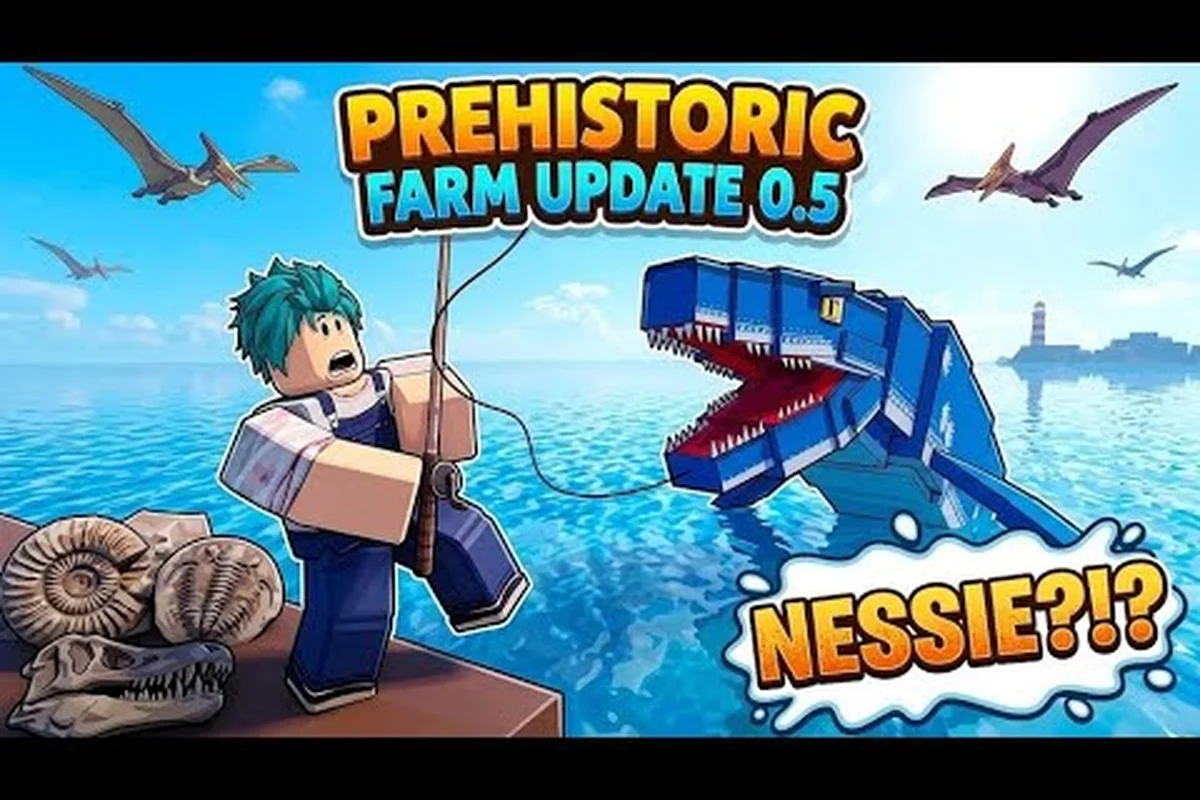
Community gameplay footage from the 0.5 update, including a walkthrough by Monkeraziel, confirms that island locations shift slightly with patches, but the general west-to-east progression remains stable. Players report that the second and third islands unlock almost back-to-back once you purchase the first boat upgrade, while the fourth and fifth islands demand a much larger coin reserve and a faster vessel.
| Island Slot | Approximate Unlock Trigger | Primary Fossil Pool | Notable Feature |
|---|---|---|---|
| Starter Shore | Tutorial completion | Common herbivore fossils | First dig meter tutorial |
| Second Isle | First boat purchase | Uncommon herbivore fossils | Deeper dig zones |
| Third Isle | Mid-tier boat | Carnivore fossil fragments | First rideable dino spawns |
| Fourth Isle | Large boat | Rare carnivore fossils | Open-sea fishing access |
| Farthest Isle | Fastest boat | Elder-tier fossil sets | Sunken Grotto approach |
The table above reflects the community-reported prehistoric farm island progression as of October 2026, though exact unlock thresholds may vary by platform. What stays consistent is the boat gate: you cannot physically reach a farther island without the matching vessel, because open-water currents push small boats back to shore.
Boat Prices and the Prehistoric Farm Travel Guide
Boat upgrades form the backbone of the prehistoric farm travel guide, since every island beyond the starter shore is locked behind a sailing range check. The price ladder is steep by design, forcing you to balance fossil sales, egg hatching, and fishing income before you can push into deeper waters. Players who rush the fastest boat often find themselves coin-starved for incubator upgrades, which slows their dino growth and delays the very rideable partners that make island hopping efficient.
| Boat Tier | Approximate Price | Sailing Range | Best Use Case |
|---|---|---|---|
| Rowboat | Free (starter) | Starter shore only | Tutorial digging |
| Small Sailboat | Low coin cost | Second and third isles | Early fossil variety |
| Mid-Size Boat | Moderate coin cost | Fourth isle | Open-sea fishing start |
| Large Cruiser | High coin cost | Farthest isle | Rare fossil farming |
| Fastest Boat | Very high coin cost | All waters + Sunken Grotto | Endgame travel and diving |
The prehistoric farm boat prices scale roughly with the value of fossils you can recover at each range tier. A small sailboat pays for itself after two or three full fossil set turn-ins, while the large cruiser requires a more deliberate coin strategy. For a deeper breakdown of which vessel to prioritize, the Prehistoric Farm boat guide covers upgrade timing and sailing mechanics in detail.
Reading the Dig Meter Before You Sail
Every island in the prehistoric farm island order uses the same green-zone dig meter, but the timing window tightens on later isles. The meter rewards timed releases, meaning you need to let go of the dig button inside the green zone to maximize fossil quality. On the starter shore, the green zone is wide and forgiving; by the fourth isle, it narrows enough that a mistimed release produces cracked fragments instead of full fossils.
This mechanic ties directly into travel efficiency, because wasted digs mean wasted boat trips. Players who master the meter on early islands save thousands of coins in repeat sailing costs, which accelerates the entire prehistoric farm island progression. The official game page notes that a dino keeps growing while its belly stays over half full, so you can leave hatchlings behind while you sail without stalling their development.
How Far Can You Sail in Prehistoric Farm?
The question of prehistoric farm how far can you sail has a concrete answer: the farthest isle sits at the edge of the open sea, and reaching it requires the fastest boat in the game. Beyond that point, the water becomes impassable, though the Sunken Grotto offers a separate diving route that technically extends your exploration range underwater. Community reports suggest the grotto is accessible only after you own the top-tier vessel, because the dive point sits in deep water that smaller boats cannot reach.
| Travel Method | Maximum Reach | Unlock Requirement | Notes |
|---|---|---|---|
| Starter rowboat | Starter shore | None | Cannot leave tutorial zone |
| Small sailboat | Third isle | Coin purchase | First taste of open water |
| Mid-size boat | Fourth isle | Coin purchase | Fishing becomes viable |
| Large cruiser | Farthest isle | Coin purchase | Rare fossil access |
| Fastest boat + diving | Sunken Grotto | Top-tier vessel | Sea-reptile fossil steals |
The prehistoric farm fastest boat is not just a speed upgrade; it is the key that unlocks the final travel tier, including the Sunken Grotto where sea-reptile fossils can be stolen. Players who skip intermediate boats and save directly for the fastest vessel report a slower overall progression, because they spend more time on the starter shore with limited fossil variety. The balanced path, according to community data, is to buy each boat tier as soon as its island range becomes the bottleneck.
Fishing and Diving as Travel Extensions
Once you own a mid-size boat or better, the open sea becomes a resource layer that runs parallel to island digging. You can fish for rare catches and dive for fossils that never appear on land, which makes the prehistoric farm travel guide about more than just sailing between dig sites. The Sunken Grotto, in particular, rewards players who treat travel as a continuous activity rather than a point-to-point commute.
This changes the value math for boat upgrades, because a faster boat also means more fishing and diving cycles per hour. Players who optimize their route to hit two dig zones, one fishing spot, and a dive point in a single loop report significantly higher coin income than those who sail directly from island to island.
Optimizing Your Prehistoric Farm Island Progression
Efficient prehistoric farm island progression comes down to sequencing your boat purchases against your fossil set completion rate. The worst pattern is buying a large boat before you have the dino roster to clear the fourth isle's dig zones efficiently, because you pay for range you cannot yet exploit. The best pattern, reported by experienced players, is to complete at least one full fossil set on each island before moving to the next, which funds the following boat tier naturally.
| Progression Stage | Recommended Action | Coin Priority | Common Mistake |
|---|---|---|---|
| Early game | Complete starter fossil sets | First boat upgrade | Buying incubator upgrades too early |
| Mid game | Unlock third isle, hatch rideable dino | Mid-size boat | Skipping fishing income |
| Late game | Farm fourth isle rares | Large cruiser | Rushing fastest boat |
| Endgame | Dive Sunken Grotto | Fastest boat | Ignoring dig meter timing |
The table above distills community-reported patterns into a repeatable sequence, but your exact path depends on how much time you spend fishing versus digging. A broader look at coin strategy appears in the Prehistoric Farm progression guide, which breaks down income sources and spending order.
Rideable Dinos and Travel Efficiency
Riding a fully grown partner dino across islands changes the feel of the prehistoric farm island order, because overland movement between dig zones becomes dramatically faster. The official game page confirms that you ride fully grown partner dinos across the islands, which means your travel time is split between sailing and overland traversal. Players who prioritize hatching a fast land dino early report smoother island loops, even with a slower boat.
This synergy matters because the prehistoric farm island progression is not purely nautical. A fast boat gets you to the shore, but a rideable dino gets you from the dock to the dig zone, and both contribute to your effective travel speed. Ignoring either half of the equation leaves you waiting on cooldowns or walking long stretches that eat into your digging time.
Frequently Asked Questions
What is the prehistoric farm island order?
The order starts at the starter shore, then moves to the second and third isles after your first boat purchase, followed by the fourth isle with a mid-size boat, and finally the farthest isle with the fastest boat. Each island gates new fossil pools and dino species.
How far can you sail in Prehistoric Farm?
You can sail to the farthest isle at the edge of the open sea, but only with the fastest boat in the game. Beyond that point, the water is impassable, though the Sunken Grotto adds an underwater diving route for players with the top-tier vessel.
What is the fastest boat in Prehistoric Farm?
The fastest boat is the top-tier vessel that unlocks all waters and the Sunken Grotto dive point. It carries a very high coin cost, and community data suggests buying intermediate boats first leads to faster overall progression than saving directly for it.
How much do boats cost in Prehistoric Farm?
Boat prices scale from a free starter rowboat through a low-cost small sailboat, a moderate mid-size boat, a high-cost large cruiser, and a very high-cost fastest boat. Exact coin amounts vary by patch, so check the in-game shop for current values.
Should I buy every boat in order?
Most players benefit from buying each boat tier as soon as its island range becomes the bottleneck, because skipping intermediate vessels leaves you stuck on early islands with limited fossil variety. The balanced path funds each upgrade through completed fossil sets.