
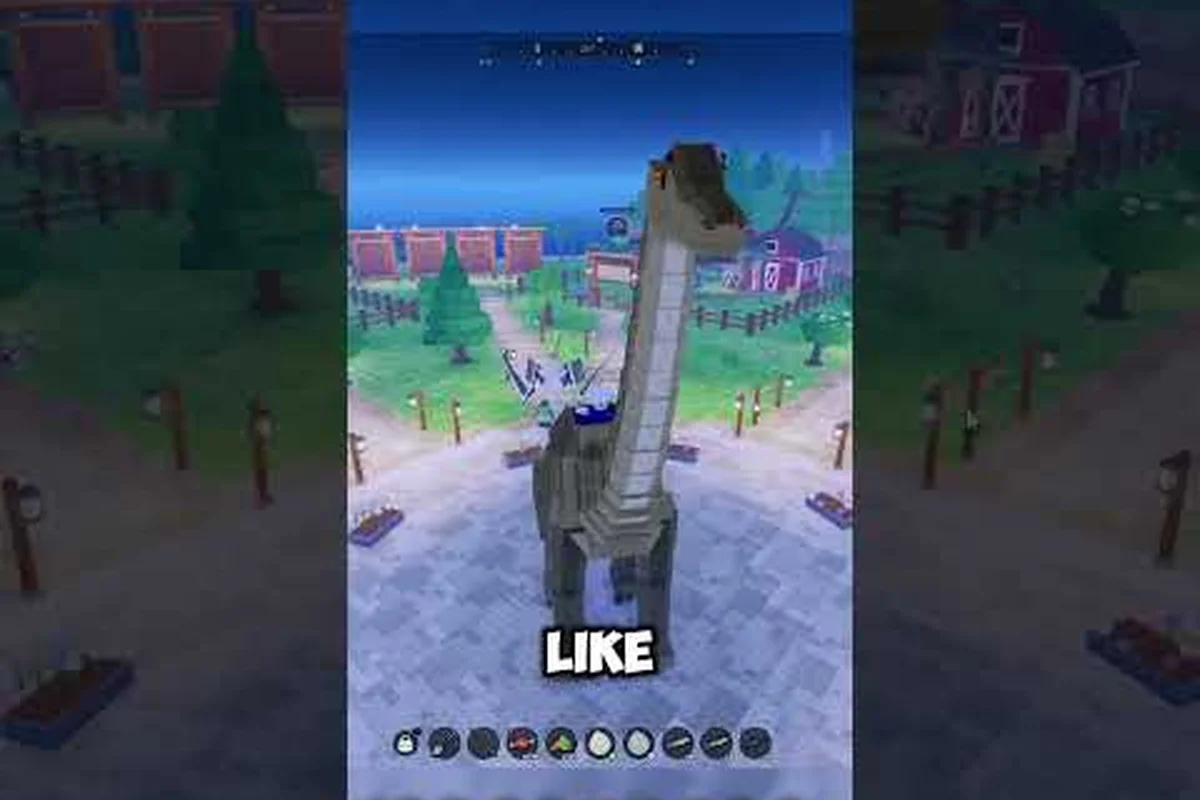
Raising a prehistoric farm dino is a careful balancing act between food, time, and attention, and a single missed feeding window can freeze a juvenile creature mid-growth. The prehistoric farm dino hunger system decides which prehistoric farm dinosaurs survive their growth arc and which stall at the baby stage forever. Whether you're nursing a Diplodocus calf through its plant-heavy diet, coaxing Nessie out of the swamp, or trying to keep a T-Rex fed without losing a finger, this guide covers the hunger mechanics that gate every prehistoric farm full grown dinosaur on your plot.
How Hunger and Food Work for Your Dinosaurs
Every dinosaur on your farm runs on a hidden hunger meter that drains in real time, regardless of whether you are online or offline. The meter is split into three internal tiers: Sated, Peckish, and Starving, and each tier changes both the growth rate and the visible behavior of the animal. According to community data gathered from active players, the meter drains faster for carnivores than for herbivores, which means a T-Rex on a normal schedule will look at you hungrily long before a Diplodocus does.
Hunger States and Their Effects
| Hunger State | Growth Speed | Behavior Clue | Auto-Decay Timer |
|---|---|---|---|
| Sated | 100% | Idle, content, occasional sit | ~30 min real time |
| Peckish | 60% | Wanders pen, sniffs trough | ~15 min real time |
| Starving | 0% (stalled) | Roars, breaks fences, may flee | Infinite until fed |
When a dino reaches the Starving state, growth flatlines completely and the creature will not progress toward the prehistoric farm full grown dinosaur stage until it is fed again. Worse, starving dinos can break out of low-tier fencing and roam the map, which often leads to a T-Rex ending up in your neighbor's wheat field. Players in the official Discord have reported that it is far cheaper to overfeed a dino than to repair fence damage after a single Starving incident.
What Triggers Hunger Drops
The dino hunger meter drops passively over time, but several actions accelerate the drain. Combat, breeding, and being ridden all pull from the same internal stamina pool that hunger is tied to. Community testing also suggests that weather plays a role: rainy days appear to drain hunger ~10% faster for outdoor dinosaurs, although the exact modifier is not officially documented and may vary by patch.
Feeding Requirements by Dinosaur Type
Not all prehistoric farm dinosaurs eat the same diet, and matching the right food to the right species is the single biggest factor in raising a prehistoric farm full grown dinosaur without stalls. The game classifies dinos into three broad diet groups, and each has its own preferred feed that boosts growth speed beyond the baseline.
Herbivores, Carnivores, and Aquatics Compared
| Dinosaur | Diet Type | Preferred Feed | Growth Bonus | Notes |
|---|---|---|---|---|
| Diplodocus | Herbivore | Ancient Fern Bundles | +25% growth | Easy to farm, ideal starter dino |
| Brachiosaurus | Herbivore | Tall Cycad Leaves | +20% growth | Requires tall crop plots |
| T-Rex | Carnivore | Premium Meat Cuts | +30% growth | Most expensive feed in game |
| Raptor | Carnivore | Basic Meat Chunks | +15% growth | Cheap, fast-cycling dino |
| Nessie | Aquatic | Deep-Sea Kelp | +20% growth | Must be fed from a dock or boat |
| Pteranodon | Piscivore | River Fish | +10% growth | Rare, only obtainable via egg events |
The Diplodocus is the most forgiving starter because Ancient Fern Bundles respawn in the starter biome every in-game day, which means new players can sustain one without ever leaving their plot. The T-Rex is the opposite end of the spectrum: Premium Meat Cuts require either a hunting trip or a coin purchase, and missing even a single feeding cycle on a T-Rex will reset its growth momentum hard, so most experienced players recommend keeping at least three days of meat stored in a chest.
Where to Find Each Preferred Feed
-
Ancient Fern Bundles — Starter biome, behind the eastern waterfall. Respawns every in-game day.
-
Tall Cycad Leaves — Jungle biome. Only grows on raised platforms, so bring climbing gear.
-
Premium Meat Cuts — Drop from large carnivore NPCs in the Volcanic Ridge area. Also sold by the traveling merchant.
-
Basic Meat Chunks — Drop from small carnivore mobs near the swamp.
-
Deep-Sea Kelp — Forage underwater near the coral reef. Requires a diving upgrade.
-
River Fish — Caught with the fishing rod at any river bend.
Players who want a complete breakdown of every prehistoric farm dinosaur food chain can check the Prehistoric Farm dino tiers guide for a ranked list of which species are worth the feed cost. That tier list pairs high-hunger dinos like the diplodocus and T. rex against the feed-per-hour payoff, so you can see exactly which prehistoric farm full grown dinosaur setups actually out-produce cheaper feeders before you sink resources into them — a useful cross-check when you're deciding whether the nessie biome grind is worth the premium meat cuts it demands.
Growth Stages and How Hunger Locks Progression
Every dinosaur moves through four discrete growth stages before reaching the prehistoric farm full grown dinosaur state: Egg, Hatchling, Juvenile, and Adult. Hunger interacts with each stage differently, and understanding these breakpoints is what separates a stalled pen full of babies from a thriving prehistoric farm full of adults.
Stage-by-Stage Breakdown
| Stage | Duration (Sated) | Hunger Sensitivity | Special Requirement |
|---|---|---|---|
| Egg | 2 in-game days | None (incubator-fed) | Stable temperature between 18-26°C |
| Hatchling | 4 in-game days | Low | Must be hand-fed every 12 hours |
| Juvenile | 7 in-game days | Medium | Auto-feeder unlocks at this stage |
| Adult | — | High | Cannot regress; once grown, dinos only need maintenance meals |
The key mechanic most new players miss is the Auto-Feeder that unlocks at the Juvenile stage. Once a dino hits Juvenile, you can place a feeder in its pen stocked with its preferred food, and the dino will feed itself on a timer. This single unlock is what makes raising a T-Rex or a Nessie actually viable, because hand-feeding them around the clock is not realistic for most players. The auto-feeder, however, has limited capacity, and if the trough runs dry, the dino drops to Peckish within 15 minutes, which is why many experienced players run two feeders per pen as a safety buffer.
The Starvation Recovery Penalty
If a dino reaches the Starving state, it does not instantly resume growth the moment you feed it. There is a built-in recovery penalty: the dino must be hand-fed three times in a row within 30 minutes to "reset" its hunger state back to Sated. Skip one of those hand-feedings and the recovery resets. This is the mechanic that causes most of the "my dino stopped growing" complaints seen in community threads, because players feed the dino once, walk away, and come back to find it is still in the Starving state. According to player reports on the community wiki, the recovery sequence was added specifically to prevent exploit feeding strategies.
Practical Feeding Schedules for Popular Dinos
The most common question new ranchers ask is what a realistic feeding schedule looks like, and the honest answer is that it depends on which dino you are raising. Below are three tested schedules based on community data that keep the prehistoric farm dino hunger meter in the Sated range without burning out the player.
Sample Daily Schedules
| Dinosaur | Hand-Feeding Times | Auto-Feeder Trough Size | Backup Strategy |
|---|---|---|---|
| Diplodocus | Morning + Evening | 6 Fern Bundles | Stockpile Ferns every other day |
| T-Rex | Every 8 hours | 12 Premium Meat Cuts | Keep 2 spare meat crates nearby |
| Nessie | Twice daily (dock) | 8 Deep-Sea Kelp (waterproof feeder) | Build dock feeder in protected cove |
The Diplodocus schedule is the gentlest because Ancient Fern Bundles are abundant, and a single morning feed is usually enough to push the dino back into Sated even if it has drifted to Peckish overnight. The T-Rex schedule is brutal but manageable once you unlock the auto-feeder at Juvenile, because Premium Meat Cuts stack in 12-slots and a fully stocked trough can cover a full 24 hours without intervention. The Nessie is a special case because its feeder must be built at water level, and the auto-feeder animation only triggers when the dino surfaces, which is roughly every 4-6 hours. A Nessie raised on a hand-feeding schedule alone will hit Starving every other day, so the dock feeder is essentially mandatory for anyone pursuing the prehistoric farm nessie adult form.
Common Mistakes to Avoid
-
Overfeeding cooked food. Cooked dishes look premium but provide no extra growth bonus over raw preferred feed, and they cost more.
-
Putting the wrong dino in the same pen. A T-Rex and a Diplodocus will not share a feeder, and the carnivore will scare the herbivore into a hunger drop.
-
Ignoring weather. As noted earlier, rain accelerates hunger drain. On stormy in-game days, add one extra feeding cycle.
-
Letting eggs cool. Eggs are not hunger-sensitive, but they do require a stable temperature band. A cold snap can kill an egg before it hatches.
For a deeper look at which prehistoric farm dino species are worth the feed investment, the Prehistoric Farm dinosaur list guide breaks down every species by growth time, cost, and final size — including exact hunger drain rates per in-game hour, so you can estimate how much raw cabbage vs. premium kibble a Diplodocus or T-Rex will consume before reaching full grown size.
Advanced Hunger Strategies and Endgame Tips
Once you have raised a few prehistoric farm dinosaurs to their adult forms, the hunger system becomes a logistics puzzle rather than a survival crisis. The endgame revolves around optimization, and the most efficient ranches in the community run on tightly-tuned feeding pipelines that minimize manual labor.
The Pipeline Approach
Serious ranchers build a Feed Pipeline: a chain of crop plots, processing stations, and storage chests that produces each preferred feed automatically, sized so the hunger bar of every penned dinosaur drains at roughly the same rate. A typical pipeline for a mid-game ranch stages the slowest-depleting food (Ancient Ferns at -2.4 hunger/hour for a fully grown Diplodocus) at the crop end, then routes faster-burning feeds (raw meat losing freshness every 18 in-game hours) through the lockers last, so spoilage never starves a T-Rex mid-shift.
-
Crop Plot growing Ancient Ferns (3x3 grid) for herbivores.
-
Meat Locker stocked from hunting trips for carnivores.
-
Underwater Garden producing Deep-Sea Kelp in glass tanks for Nessie.
-
Storage Chest per dino pen holding 48 hours of preferred feed as buffer.
This kind of setup allows a single player to sustain 8-10 dinosaurs at once without ever logging in more than twice per day, which is roughly the threshold community data shows for "casual but consistent" ranchers. For more on the broader evolutionary mechanics that decide which prehistoric farm dinosaurs are worth the pipeline investment, the Prehistoric Farm dino guide 2026 covers the new growth curve changes that shipped earlier this year.
Trophy and Reward Optimization
Some players raise dinos specifically for the Trophy Collection rewards, which require a prehistoric farm full grown dinosaur of each species. The fastest route to a complete collection is to prioritize species with short growth cycles first, so Raptors and small herbivores should be raised before Brachiosaurus and T-Rex. According to community tracking, a focused player can complete the base Trophy Collection in roughly 3-4 in-game months if they keep all hunger meters in the Sated range throughout the run. The Prehistoric Farm flying dino guide covers the rare egg events that unlock the trickier trophy entries, including the Pteranodon.
What Happens at Endgame
Once a dinosaur hits Adult, its hunger mechanic shifts from "growth-critical" to "maintenance." Adult dinos only need to be fed every 48-72 hours to stay content, and they cannot regress to a smaller stage. They can, however, become unhappy and refuse to breed if starved repeatedly, which matters for players running a breeding economy. The simplest endgame habit is to set a single weekly reminder to top up every trough, and the ranch will essentially run itself.
The prehistoric farm dino hunger system is the silent gatekeeper of every prehistoric farm full grown dinosaur on your plot, and the players who treat it as a daily checklist rather than an emergency always end up with healthier, faster-growing dinos. Master the schedule for your favorite species first, automate the rest, and the prehistoric farm will reward you with a fully grown prehistoric farm dinosaurs roster in a fraction of the time.
Frequently Asked Questions
What happens if I forget to feed my dinosaur?
The dinosaur drops from Sated to Peckish after about 30 minutes of real time without food, and then to Starving roughly 15 minutes later. At Starving, growth halts completely, and the dino will break fences and roam the map. You need to hand-feed it three times in 30 minutes to reset it back to Sated.
Do all dinosaurs need different food?
Yes. The prehistoric farm dinosaurs food system splits species into herbivores, carnivores, and aquatics, and each group has a preferred feed that grants a growth speed bonus. Feeding a Diplodocus meat, for example, will not harm it but will remove the +25% growth bonus you would otherwise get from Ancient Fern Bundles.
Can I share one feeder between two dinosaurs?
No. Each dino needs its own feeder stocked with its species-specific preferred food, because the prehistoric farm dinosaurs food system is built around per-pen hunger tracking, not shared trough logic. Sharing is not supported, and a T-Rex placed in the same pen as a Diplodocus will constantly scare the herbivore, causing hunger drops until the Diplodocus goes Starving.
How long does it take to grow a T-Rex to full size?
A T-Rex raised on a consistent feeding schedule takes roughly 13 in-game days from Hatchling to Adult, but only if it stays in the Sated state the entire time. Any Starving incident can add 2-3 extra days to the cycle, so feeding consistency matters more than raw playtime for raising a prehistoric farm t rex.
Is there a way to feed a Nessie without being on a boat?
Yes, once it reaches the Juvenile stage you can unlock the dock-mounted auto-feeder. Place it at the water's edge in a calm cove, stock it with Deep-Sea Kelp, and the prehistoric farm nessie will surface to feed roughly every 4-6 hours without any further input.